

Two of the most common questions we hear about our Face Treatments menu both circle the same theme: “What’s the difference between XERF and RF microneedling, and which one do I actually need?”
Both treatments use radiofrequency (RF) energy to stimulate collagen production. But they go about it in very different ways, and understanding that difference makes it a lot easier to know which one fits your goals.
What They Have in Common
Both XERF and RF microneedling (sometimes called Exion RF microneedling on our menu) work by delivering controlled RF energy into the skin to encourage your body to produce new collagen and elastin. Both can improve firmness, texture, and overall skin quality. And both are popular options for clients dealing with early to moderate signs of aging.
That’s where the similarities end.
How XERF Works
XERF is a fully noninvasive treatment. It uses multi-frequency monopolar RF energy; delivered through the surface of the skin, (with no needles involved) to reach the shallow, middle, and deep layers of tissue. Because energy is delivered externally, there’s no downtime: most clients return to their normal routine immediately after treatment.
XERF tends to be a good fit for clients who want a noninvasive option, who are treating broader areas of laxity (like the jawline or neck), or who simply prefer to avoid needles altogether.
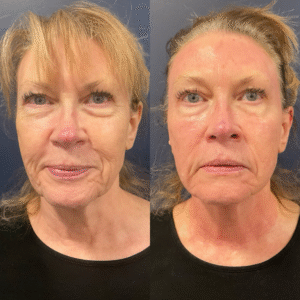
How RF Microneedling Works
RF microneedling takes a different route to a similar goal. Fine microneedles create controlled micro-injuries in the skin, which channel RF energy directly into deeper layers. This combination of mechanical micro-injury and thermal energy triggers a more intensive repair response; including increased cellular turnover, not just collagen remodeling.
Because it involves microneedles, RF microneedling is minimally invasive and typically requires 1 to 2 days of downtime. It’s often the better choice for clients focused on texture, fine lines, or more targeted concerns, alongside general skin laxity.

So, Which One Should You Choose?
It depends on what you’re treating and how much downtime you’re comfortable with.
XERF may be the better fit if you:
- Want a fully noninvasive option with zero downtime
- Are primarily concerned with skin laxity and firmness
- Are treating a broader area, like the jawline or neck
RF microneedling may be the better fit if you:
- Want to address texture or fine lines in addition to laxity
- Are comfortable with a short recovery period
- Are looking for a more intensive single-session response
For many clients, the honest answer is “both”; used in combination or alternating over time to address different layers of concern. That’s a conversation worth having directly with your provider.
Let’s Figure Out Your Plan
The easiest way to know which treatment (or combination) makes sense for you is a consult. We’ll walk through your goals and skin concerns together and build a plan that actually fits; no guessing required.
Learn more about XERF or RF microneedling on our treatment pages.
