How non-invasive body contouring technology actually works, who should be administering it, and how to evaluate a provider before booking a session shapes what you’ll get from treatment. Non-invasive body contouring is a category of treatments, including cryolipolysis, radiofrequency, ultrasound cavitation, and laser lipolysis, that reduce localized fat or tighten skin without surgery. Most confusion clients bring into a consultation comes down to unrealistic expectations about timelines or not knowing what questions to ask before committing to a package. Knowing the mechanism behind the machine changes how you judge whether a provider and a plan are right for you.
Key Takeaways
- Non-invasive body contouring devices typically require a series of 4 to 8 sessions spaced weeks apart to show measurable fat reduction or skin tightening.
- Treatments like cryolipolysis and radiofrequency target fat layers roughly 0.5 to 2.5 cm below the skin, which is why candidate screening for tissue thickness matters.
- A provider’s credentials should be verifiable through specific training on the exact device model used, not just a general aesthetics license.
How cryolipolysis, radiofrequency, and ultrasound cavitation target fat differently
Non-invasive body contouring falls into a handful of main categories: cryolipolysis (fat freezing), radiofrequency, ultrasound cavitation, and laser lipolysis. Each works differently on tissue. Cryolipolysis cools fat cells to a temperature that damages their membranes without harming the skin above them. Radiofrequency and laser lipolysis heat tissue layers instead, driving collagen production and skin tightening over time. Ultrasound cavitation disrupts fat cell structure through sound wave energy. In every case, the device isn’t removing fat on the spot, it sets off a process the body finishes on its own over the following weeks, which is why you won’t see the full result the day you walk out.
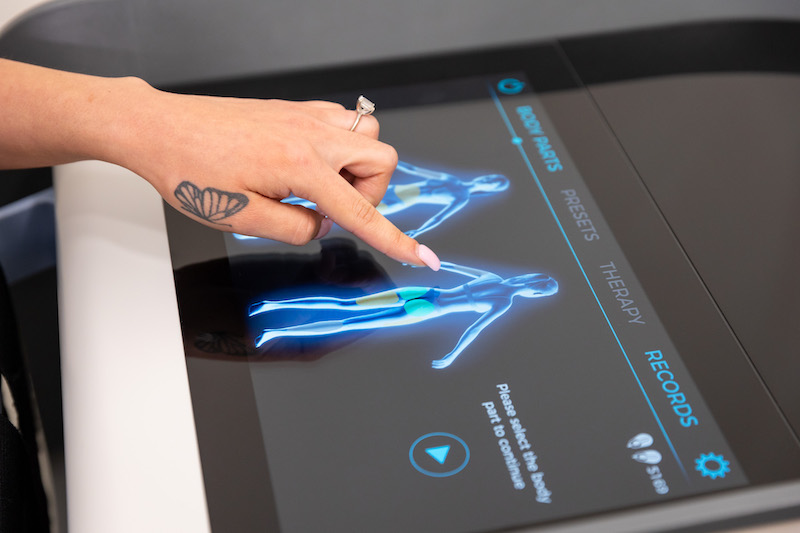
That gradual timeline matters for how you judge a session. The day after a treatment is too early to judge effectiveness, because the body needs time to clear the affected fat cells through normal metabolic processes. Cryolipolysis and radiofrequency devices typically target fat layers between 0.5 cm and 2.5 cm below the skin surface, which is why a physical assessment of pinchable fat is a standard first step before treatment. Settings for temperature, energy intensity, and treatment time get adjusted per body area and tissue type. A generic setting applied to every client, regardless of where the fat sits or how thick the tissue is, signals the provider isn’t customizing anything.
Why device-specific certification matters more than a general aesthetics license
The most important credential isn’t a general aesthetics license, it’s device-specific certification from the manufacturer of the exact machine being used. A technician trained broadly on skincare may understand skin physiology well, but that doesn’t mean they know the settings, safety thresholds, or contraindications specific to an FDA-cleared device model. Those two things aren’t interchangeable, and it’s worth asking directly which one applies to the person treating you.
Continuity matters too. When the same provider tracks your progress across a full series of sessions, they notice things a rotating staff wouldn’t catch, like a treatment area responding slower than expected or a setting that needs adjusting for your tissue. That consistency tends to produce more reliable outcomes than being handed off between different people each visit. Years of hands-on experience in wellness and aesthetics is also a fair indicator of how well someone can customize a plan to your specific tissue and health history rather than running you through a standard protocol. Jenessa McKray has worked in the wellness and beauty field since 2015, a length of experience that allows for pattern recognition across many different body types and treatment responses. Our team is trained on the advanced technologies we offer, including EmSculpt NEO and Exion by BTL Aesthetics, Venus Bliss and Venus Bliss MAX by Venus Concept, Icoone by i-Tech Industries, and BallancerPro by Mego Afek, and these technologies are supported by applicable FDA clearances, CE certifications, and medical-device quality standards such as ISO 13485, depending on the specific device and configuration, with our providers receiving device-specific training to ensure treatments are performed safely and appropriately for each client. When you’re evaluating a provider, ask that question directly and expect a specific answer, not a vague reference to “training.”.
Who is a good candidate for non-invasive body contouring
Non-invasive body contouring is built for people already near a stable, healthy weight who have localized fat pockets or mild skin laxity, not for anyone looking to lose a significant amount of weight. That distinction gets missed often, and it’s the source of most disappointed expectations. Body mass index and skin elasticity get assessed early in a consultation because these devices work on subcutaneous fat and skin quality, not visceral fat or significant excess weight.
Screening should also catch exclusion factors before a session ever gets booked:
- Certain active skin conditions
- Infections in the treatment area
- Specific medical histories that make a given device inappropriate for that person right now
Candidacy is treatment-specific, not a blanket yes or no. Someone might be a strong fit for radiofrequency skin tightening on their abdomen but not a fit for fat-freezing in that same area, depending on how thick the tissue is when it’s pinched and measured.
What an individualized treatment plan should include before you commit
A genuinely individualized plan starts with an intake assessment, not a device selection. That means health history, target areas, tissue thickness, and lifestyle factors get reviewed before anyone decides which technology fits. If a provider recommends the same single device for every goal you mention, that’s a red flag, since different areas and different outcomes usually call for different technologies or a combination of them.
Session spacing and total series length should be dictated by how long it takes the body to clear treated fat cells, not by a fixed sales package sold at the same length to everyone. A plan that pairs the technology with wellness support, nutrition guidance, activity recommendations, and follow-up check-ins, tends to hold results better over time than treatment done in isolation. The device does its part, but what you do around it determines how long that part lasts.
Frequently asked questions
What technology does body contouring use to reduce fat and tighten skin?
Most non-invasive body contouring protocols call for 4 to 8 sessions spaced weeks apart, since the body needs that time to metabolize treated fat cells between visits. Exact counts depend on the device, the treatment area, and your starting tissue thickness.
Is there any downtime or recovery needed after a treatment?
Non-invasive treatments are generally designed with no significant downtime, which is part of why people choose them over surgical options. Some mild redness, tenderness, or temporary numbness in the treated area is common and typically resolves within a day or two.
Can body contouring technology be used on areas with loose skin after weight loss?
Radiofrequency-based treatments are specifically designed to address loose skin by heating tissue to stimulate collagen production, which can improve mild to moderate laxity. Severe excess skin from major weight loss usually needs a surgical evaluation rather than a non-invasive approach alone.
Who is body contouring designed for, and how does a treatment plan differ from person to person?
Tissue thickness, target area, skin elasticity, and health history all factor into which device and session schedule make sense for a given person. Two people with similar goals can end up on different protocols because their starting tissue and skin quality aren’t the same.
What happens if I don’t maintain a stable weight after treatment?
Body contouring is designed to target specific areas and improve body shape, not to serve as a substitute for maintaining a stable, healthy weight. Significant weight gain can change the treated area’s overall contour, while significant weight loss may change the shape and reveal concerns such as skin laxity. That’s why we look at the whole picture when creating a treatment plan. Depending on the client’s goals, we may combine technologies such as EmSculpt NEO for muscle and body contouring, Venus Bliss for fat reduction, Icoone for body shaping and lymphatic support, and Exion Body RF for skin tightening, rather than focusing on a single treatment. The best results are supported by maintaining a relatively stable weight and following a personalized plan based on the client’s body composition, goals, and response to treatment.
What to check before you book a provider
Before committing to any series, ask for the specific device model being used and whether the person treating you is certified on that exact model, not just generally trained in aesthetics. Confirm how session spacing was decided for your case rather than accepting a pre-set package length without explanation. Frisco Body Contouring offers an InBody scan as part of assessing tissue and body composition before recommending a plan, which is worth asking about if you want your candidacy evaluated with actual data rather than a visual guess.
