Timing matters more than most people expect with cellulite treatment, and starting too close to a deadline is the single most common planning mistake we see. Cellulite treatment timing is the practice of working backward from a fixed event date, counting the full session series plus the collagen remodeling window, to determine when to start. Get the timeline right and the results actually catch up to the event.
Key Takeaways
- Start cellulite treatment at least 3 to 4 months before a wedding so multiple sessions and collagen remodeling can finish before the event.
- Most non-invasive cellulite protocols use 6 to 12 sessions spaced about 1 week apart, so a vacation timeline should allow for that full series.
- After pregnancy, wait until your OB/GYN clears you, typically at the 6-week postpartum visit, before beginning skin tightening or cellulite treatment.
Why a wedding, vacation, or postpartum timeline each need different planning
A wedding timeline needs to include the full treatment series plus the collagen remodeling window that follows it, not just a single appointment squeezed in the week before. Collagen remodeling after non-invasive skin treatments continues for 3 to 6 months, so final results are not immediate. Book too late and you’ll walk down the aisle mid-process, before the changes have actually finished showing up. We typically recommend scheduling the final cellulite treatment about one to two weeks before the event, which leaves enough time for any temporary redness, swelling, or sensitivity to settle.
Vacation planning is different. Sun exposure, swelling, and travel logistics all interact with treatment timing in ways a wedding date doesn’t. Flying shortly after a session, or spending a week in direct sun on treated skin, can affect how comfortable and how visible your results are, so the series needs to wrap up with enough buffer before you leave.
Postpartum is its own category. Most providers won’t start non-invasive body treatments until your OB/GYN has cleared you, which is usually the 6-week postpartum visit. A C-section extends that timeline further, since the incision and underlying tissue need more time to heal before any energy-based device goes near that area. Whatever the event, work backward from the fixed date: count the sessions, add the remodeling window, and that tells you your start month.
How non-invasive cellulite sessions work and why spacing matters
A typical non-invasive cellulite session uses mechanical massage, radiofrequency, or acoustic wave energy applied to the treatment area, with no cutting, needles below the surface, or anesthesia. Non-invasive cellulite treatments work by increasing circulation and stimulating collagen, so results build gradually across a series rather than showing up after one visit.
Most protocols run 6 to 12 sessions spaced about a week apart. That spacing isn’t arbitrary, tissue needs time to respond to each session before the next one, and spacing them closer together doesn’t accelerate results, it just wastes appointments. A typical session runs about 30 to 60 minutes, depending on the treatment area and the specific plan.
You can typically resume normal activity right after a session, though most providers recommend avoiding intense heat, hard workouts, or alcohol for 24 to 48 hours to let the tissue settle. Consistency across the full series matters far more than how intense any single session feels. Skipping sessions or spacing them out further than a week slows the whole process down.
Cellulite dimpling vs skin laxity: why the distinction changes your treatment plan
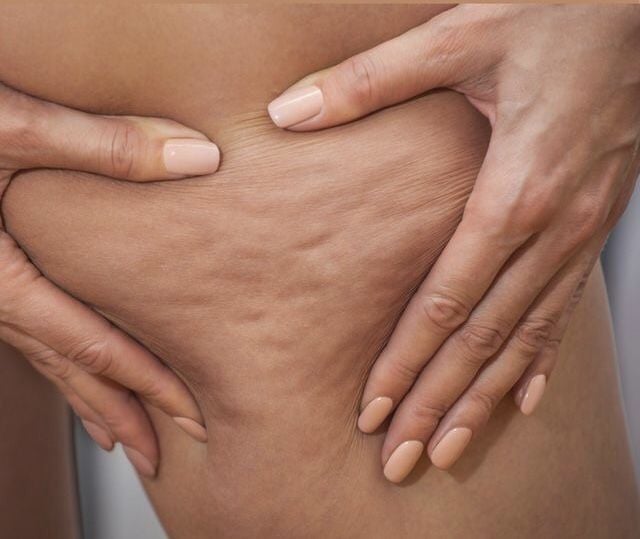
Postpartum bodies often present both problems at once: cellulite dimpling and loose skin layered on top of each other. That distinction changes what device makes sense.
| Concern | What causes it | Device that targets it |
|---|---|---|
| Cellulite dimpling | Fibrous bands under the skin | Acoustic wave or massage-based devices |
| Skin laxity | Reduced collagen in deeper skin layers | Radiofrequency and microneedling |
Non-invasive body contouring devices work on subcutaneous fat, the layer under the skin, and loose skin, not visceral fat, which is worth knowing before you expect a device to change what’s happening deeper in the abdomen.
A proper evaluation starts by identifying which issue is actually dominant. Someone with mostly loose skin and minimal dimpling needs a very different session count than someone with pronounced cellulite and firm underlying skin. Postpartum skin laxity often responds to heat-based treatments because controlled heating stimulates new collagen production, and that response tends to build over more sessions than cellulite treatment alone requires. This is how Frisco Body Contouring approaches new postpartum clients. They typically recommend a minimum of three skin tightening sessions, though the ideal number depends on the degree of skin laxity, the treatment area, and individual goals.
